Grief Without a Hereafter: Inside America's Quiet Secular Funeral Movement
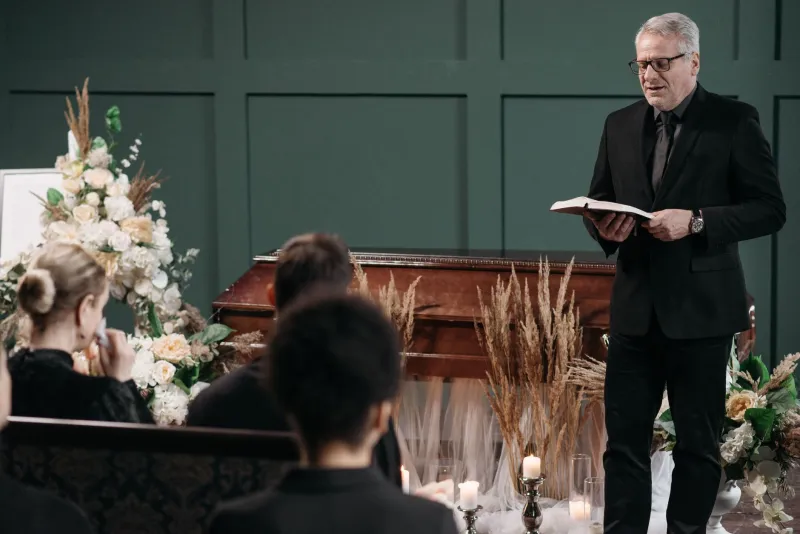
In the funeral home's back office in Columbus, Ohio, a binder sits on the shelf labeled simply "Standard Services." Inside are templates for committals, eulogies, and prayers — nearly all of them written with an audience of believers in mind. It is a quiet mismatch, and it is becoming impossible to ignore.
According to Pew Research Center data, roughly three in ten American adults now identify as religiously unaffiliated. Yet the overwhelming majority of funeral practices in the United States — from the graveside committal to the memorial service structure — assume a shared faith in an afterlife. For grieving families who do not share that faith, the ritual language of death can feel less like comfort and more like erasure.
The Problem with "She's in a Better Place"
Consider the well-meaning phrases that saturate American mourning: "He's with Grandma now." "This isn't goodbye, only see you later." "She's watching over you." For the bereaved believer, these are stitches in a fabric of meaning. For the secular mourner, they can land as a quiet denial of everything the deceased actually believed.
"Families tell me the hardest moment isn't the loss itself," says a humanist celebrant based in Portland, Oregon, who asked to be identified only by her first name, Margaret. "It's standing at a service where the officiant promises resurrection to a man who spent fifty years as a skeptical materialist. They feel like his own death is being used to contradict his life."
This tension is what scholars of death studies sometimes call ritual mismatch — a gap between the ceremonies available and the worldview of the people they're meant to serve. And as the unaffiliated population grows, the gap is widening into a genuine civic and cultural problem.
A Profession Built to Fill the Gap
The response has been the rise of the secular celebrant — a trained officiant, often certified through organizations like the Humanist Society or the American Humanist Association, who crafts memorial services grounded in the deceased's actual life and values rather than in theological promises.
A humanist memorial service typically inverts the traditional structure. Instead of moving from grief toward the assurance of heaven, it moves from loss toward legacy: the story of a life, told honestly, including its imperfections. Music replaces hymns. Readings come from poetry, literature, or the deceased's own letters. There is no consoling fiction — and, celebrants argue, no condescension either.
"People assume secular means sterile," Margaret says. "But grief doesn't require doctrine. It requires acknowledgment, community, and honest memory. We offer those without asking anyone to believe anything they don't."
The movement has institutional muscle behind it. Funeral consumers' organizations now offer guidance on secular burial options, green cemeteries accept nonreligious interment, and some hospice chaplaincy programs have expanded to include humanist chaplains — a development that has itself sparked legal debate over public funding and religious definition.
Death as the Final Test of Free Thought
There is a reason death remains the hardest case for secular philosophy. Religion has always offered its most compelling product at the graveside: the promise that the story doesn't end. A worldview built on evidence and honesty offers no such comfort — only the harder, and arguably more dignified, consolation of truth.
But secular humanists argue that this honesty is not a deficiency. It is a discipline. To mourn someone without pretending they still exist is, in this view, the ultimate act of respect: honoring a person exactly as they were, without rewriting them into a narrative they would have rejected.
There is also a constitutional dimension worth noting. The dead cannot consent to religious rites performed over them, and the living — particularly in state institutions like veterans' cemeteries and public memorial spaces — retain the right to memorialization free of imposed religion. The same First Amendment wall that protects the living conscience extends, in a meaningful sense, to how we honor the dead.
Practical Guidance for the Secular Bereaved
For families facing this situation, celebrants offer straightforward advice:
- Plan before the crisis. Document your wishes for a secular service in writing, alongside a will or advance directive. Survivors under stress default to tradition.
- Name a secular advocate. Designate someone who knows your views and will insist on them when funeral directors offer the standard script.
- Ritual is allowed. Candle lighting, music, shared meals, and spoken remembrances are not religious property. Meaning is a human inheritance, not a denominational one.
- Ask for celebrant credentials. Certification through established humanist organizations ensures training in both ceremony craft and family sensitivity.
An Honest Goodbye
The secular funeral movement is not a rejection of mourning — it is a reclamation of it. It insists that a life can be honored completely, truthfully, and movingly without a single appeal to the supernatural. And it suggests that free thought's final frontier is not death itself, but the courage to face it without the consolations we inherited.
The dead, after all, cannot speak for themselves. The least the living can do is speak for them honestly.