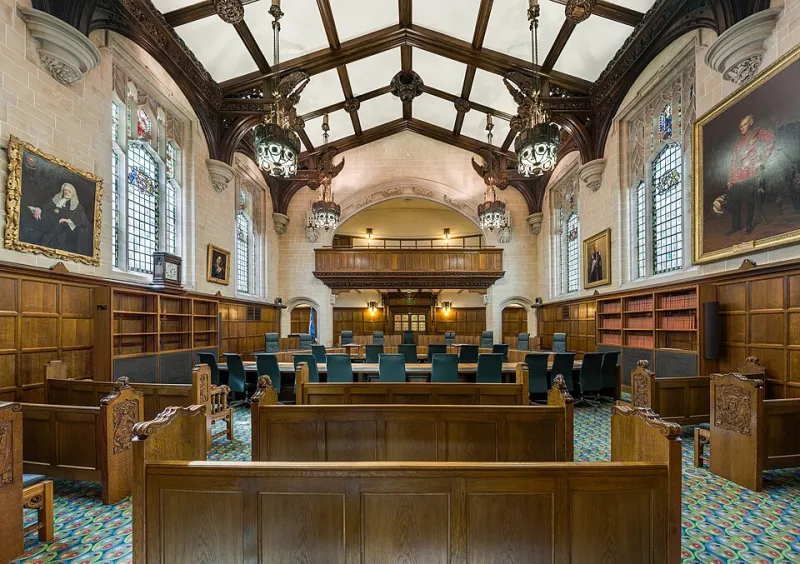
Tax-Exempt and On the Ballot: The Quiet Machinery of Political Religion
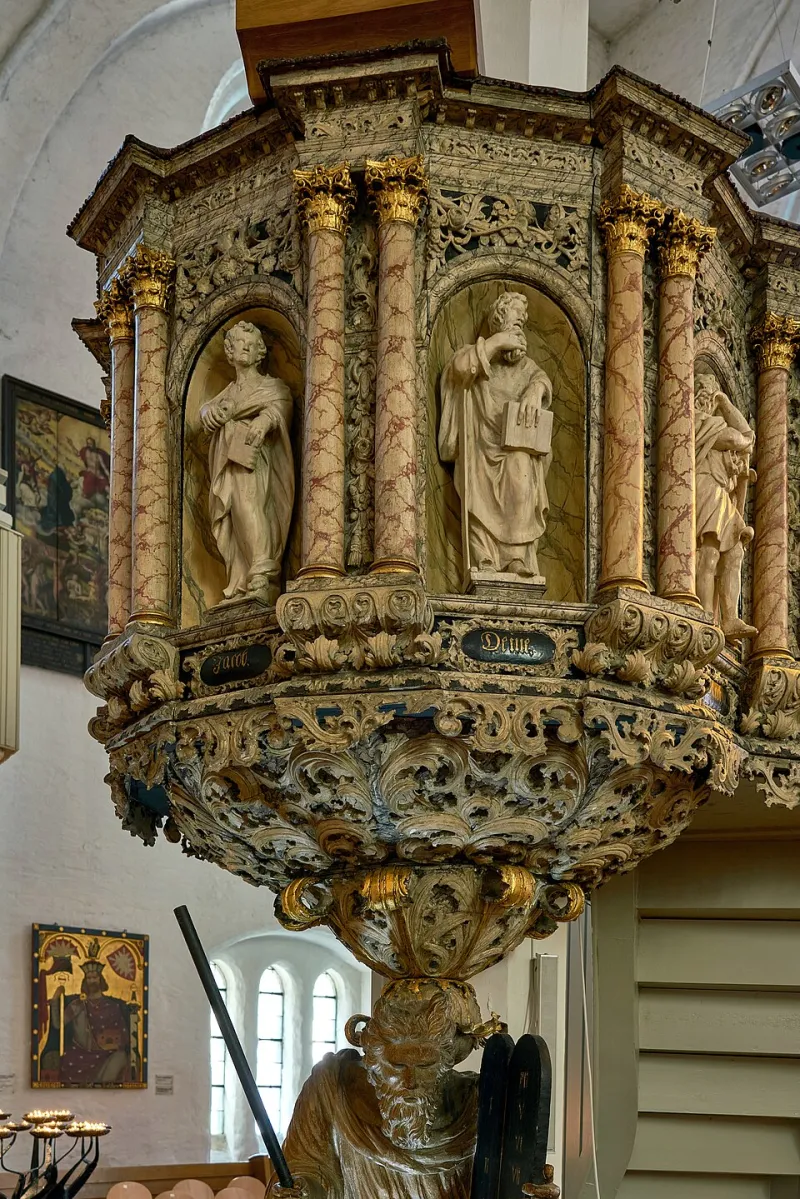
Photo: Virtual-Pano, CC BY-SA 4.0, via Wikimedia Commons
Every two years, American voters head to the polls with the assurance that the federal government does not subsidize political campaigns. It is a comforting fiction. In reality, an enormous reservoir of untaxed wealth — held by congregations, ministries, and religious nonprofits — flows into the electoral arena every cycle, shielded by a statute that the IRS has largely stopped enforcing.
The statute in question, Section 501(c)(3) of the Internal Revenue Code, dates to 1954 and carries the name of its sponsor, then-Senator Lyndon Baines Johnson. Its terms are blunt: organizations exempt from federal income tax under that provision may not "participate in, or intervene in" any political campaign on behalf of or against a candidate. Violators risk losing their tax exemption — a penalty that, for a large church, could amount to millions of dollars annually.
The law is real. Its enforcement is another matter entirely.
A Statute Without Teeth
Since 1954, the IRS has revoked the tax-exempt status of a church over electioneering a number of times best described as vanishingly rare. The most cited example remains the 1992 case of the Church at Pierce Creek in Binghamton, New York, which ran full-page newspaper ads urging readers not to vote for Bill Clinton. Even then, the revocation came only after years of litigation, and no comparable action has been taken against a major congregation since.
Scholars and watchdog groups have documented hundreds of alleged violations in recent cycles. In 2020 and again in 2024, pastors across several states delivered endorsements from the pulpit — some explicitly framed as "pulpit freedom" challenges, staged deliberately to dare the IRS to act. The IRS, facing budget cuts and political pressure, has not taken the bait.
The result is a system that operates on selective blindness. The law remains on the books, which allows its defenders to point to it as a safeguard. Its non-enforcement allows politically sophisticated religious organizations to treat it as a formality. Everyone can claim the rule is being followed. Nothing forces them to prove it.
The Gray Machinery of Mobilization
Direct endorsement is only the crudest tool in the kit. More consequential are the practices that hover just inside the letter of the law: voter guides distributed in pews that conspicuously highlight one party's positions; candidate forums held on church property where invitations follow a partisan pattern; sermon messaging that stops just short of naming names while making the choice unmistakable.
Then there is the infrastructure question. A megachurch with a mailing list of tens of thousands, a professional communications staff, and a weekly audience of committed attendees possesses a campaign asset that no Super PAC can purchase at any price: trust and reach, delivered weekly, tax-free. When that apparatus is pointed toward electoral ends — even indirectly — the effect on a race in a swing state is not hypothetical. Political scientists who study mobilization have long noted that face-to-face, community-based contact is among the most persuasive forms of voter outreach money can't normally buy.
Meanwhile, the financial mechanics compound the advantage. Tithes and offerings are deductible for donors and untaxed for recipients. Every dollar a congregation saves on taxes is a dollar available for its mission — and if that mission includes shaping elections, the federal treasury is, in a real sense, absorbing part of the cost.
Why Secular Voters Should Care
It is tempting for nonbelievers to shrug. Churches have always been political; what's one more sermon? But the objection is not to religious participation in public life — citizens of faith have every right to organize, vote, and advocate. The objection is to a structural asymmetry: one category of institution enjoys tax exemption while engaging in electoral activity that would strip any secular nonprofit of its status.
The stakes run deeper than tax policy. The First Amendment's Establishment Clause was designed to prevent the state from entangling itself with religion. Tax exemptions for politically active churches invert that relationship, entangling the state's revenue system with religious electioneering. A voter who objects to a pulpit's political endorsements is still, through the tax code, financing the platform they preach from.
There is also a chilling effect on honesty within congregations themselves. Members who dissent politically may find that their house of worship has, in effect, become a campaign office — a place where spiritual belonging and partisan identity are quietly fused. That fusion serves neither faith nor democracy.
What Enforcement Could Look Like
Fixing this does not require new legislation; the statute already exists. It requires the IRS to investigate complaints with the seriousness it applies to secular nonprofits, and it requires Congress to fund the agency adequately enough to do so. Requiring churches to file the detailed Form 990 that other nonprofits must file — a disclosure requirement they have been exempted from since 1969 — would bring a measure of transparency to a domain currently operating in the dark.
Some have proposed the opposite solution: repeal the Johnson Amendment entirely and let churches endorse openly. But repeal would merely legalize the subsidy, converting an unenforced rule into an explicit channel of tax-advantaged campaign spending. That is the wrong direction for a republic that has, since 1791, insisted on a wall between spiritual authority and state power.
The Free Thought Association takes no position on any candidate or party. Our position is simpler and, we believe, more durable: a rule that applies to everyone must be enforced against everyone, and no institution — however venerable, however sincere — should enjoy a tax-funded advantage in the contest for votes. Reason can survive disagreement. It cannot survive a rigged scoreboard.