Posted on the Wall, Tested in Court: A 2026 Practical Guide for Secular Families Facing Ten Commandments Displays

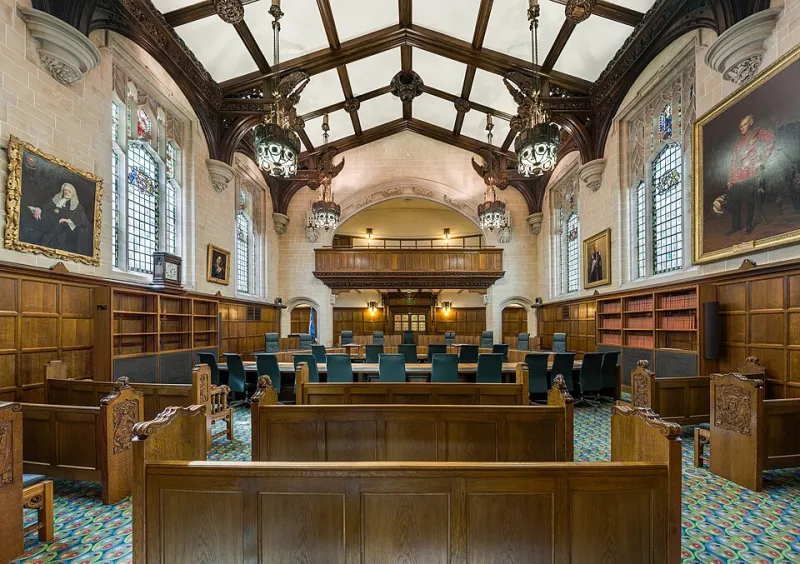
Photo: The original uploader was Three Sixty at Wikimedia Commons., CC0, via Wikimedia Commons
The return of Ten Commandments displays to public school classrooms has produced two predictable reactions: alarm that the wall between church and state is collapsing, and resignation that nothing can be done. Neither is a useful posture for parents who take both the Constitution and their children's education seriously. The more responsible response is neither panic nor passive acceptance. It is informed civic action, conducted with the patience that legal change actually requires.
A Legal Question, Not a Taste Dispute
A Ten Commandments poster in a classroom is not objectionable merely because it is religious. Public schools may teach about religion, and they may use religious texts in appropriate academic contexts. The constitutional problem arises when the government appears to endorse a particular religious code, especially in a setting where children are a captive audience and attendance is compulsory.
The Supreme Court addressed this directly in Stone v. Graham (1980), striking down a Kentucky law that required Ten Commandments posters in public classrooms. The Court found no secular purpose sufficient to justify the display and emphasized that the pre-eminent purpose was plainly religious. That decision has not been overruled. Later cases, including McCreary County v. ACLU (2005) and Van Orden v. Perry (2005), turned heavily on context and purpose. Kennedy v. Bremerton (2022) altered parts of the establishment clause analysis, but it did not erase the basic principle that public schools may not coerce or endorse religion.
State legislators have responded by drafting laws meant to characterize the Ten Commandments as a historical document rather than a devotional text. Courts will ask whether that purpose is genuine or merely a label attached after the fact. The outcome will vary by statute, classroom context, and the evidence presented. For parents, the practical lesson is that documentation and local facts matter enormously. A poster accompanied by a teacher's devotional commentary is a different legal problem from a poster in a historical-documents display with other primary sources.
Start With Records, Not Rage
When a parent learns that a display has appeared, the first move should be to gather facts. Photograph the display if school policy permits photography, noting the date, classroom, and any surrounding materials. Save copies of the state statute, district policy, school board minutes, and any letter or notice sent to families. Record what the child reports about how the display was introduced. Was it described as a legal requirement, a historical artifact, or a moral code? Was it used during instruction? Did a teacher single out students who objected?
These details distinguish a constitutional claim from a generalized objection. They also help local organizations identify patterns rather than isolated incidents. A single poster may be addressed through a district inquiry. A district-wide policy may require a different strategy.
Public records requests are a particularly useful tool. School boards often discuss legal mandates in meetings, and district emails may reveal how administrators interpreted the law. Requests should be narrow and specific: policies, training materials, communications with state officials, and any guidance about opt-outs or alternative assignments. Broad requests invite delay; precise requests produce usable evidence.
Protecting the Child While Preserving the Claim
Parents understandably want the display removed immediately. But the fastest way to make a child the center of a public controversy is to encourage a classroom confrontation. A student should not be asked to deliver a protest speech, refuse a lawful instruction, or become the named face of a lawsuit without careful legal advice.
A better approach is to object in writing as a parent, request a meeting with the principal or district counsel, and ask what secular purpose the display serves and how the district is complying with Stone. Keep the tone factual. State what the child observed, why the parent believes the display endorses religion, and what remedy is requested. Ask whether alternative arrangements are available during any related instruction, but do not assume an opt-out solves the constitutional issue. A poster on the wall affects the classroom environment even when a child is excused from a lesson.
If litigation becomes necessary, experienced counsel can often structure the case to minimize the child's exposure. Parents may be able to assert their own interests in directing their children's upbringing, and organizations may pursue claims on behalf of members. Courts sometimes allow pseudonymous pleadings in sensitive cases, though that is not guaranteed. The point is to let lawyers design the legal vehicle rather than letting a school board force a child into one.
Organizing Without Theater
Local secular groups are most effective when they behave like civic institutions rather than protest movements. That means attending school board meetings, asking questions during public comment, submitting written testimony, and publishing clear explanations of the law. It means building coalitions with other parents who may object for different reasons, including families from minority religious traditions who also do not want the state choosing a creed.
A useful local campaign has three components. First, create a simple reporting form so parents can submit dates, classrooms, and descriptions of displays. Second, establish a records-and-research team that tracks district policies and state legislation. Third, recruit legal observers or attorneys who can review documentation before anyone files a complaint. This division of labor prevents a single angry email from becoming the group's public identity.
School board testimony should be brief and evidence-based. Cite the statute, the district's own policies, and the relevant case law. Ask for a written response. Avoid speculation about motives; ask instead what secular instructional purpose the display serves and how it is integrated into the curriculum. If the answer is that the state requires it, ask whether the district has obtained legal advice about Stone and whether it will indemnify employees who follow the mandate.
The Long Game
Not every objection will succeed, and not every display will be removed quickly. Litigation over establishment clause questions can take years. But the constitutional system is designed for exactly this kind of sustained, evidence-based pressure. Parents who document carefully, object in writing, support local organizations, and refuse to turn their children into symbols are doing more than registering a complaint. They are helping courts and school boards see the difference between a historical document and a state-sponsored catechism.
This is civic guidance, not legal advice. Families facing a specific dispute should consult an attorney licensed in their state. But the broader principle is clear: a secular parent need not ignore a religious display, and need not panic about it either. Reason, evidence, and patient organizing remain the most durable tools available.